How to Play TK Punk Gold
The decision order that keeps raising, combat, and endings aligned.
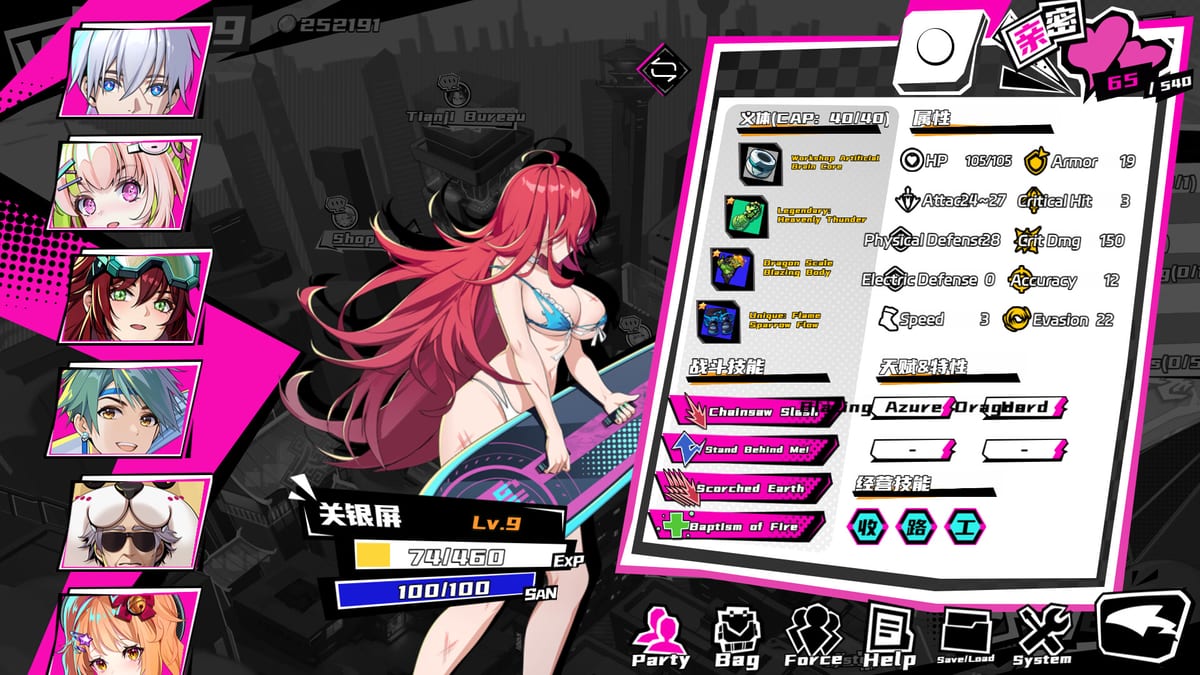
TK Punk Gold plays best when you stop thinking in isolated menus and start thinking in one weekly loop. You are a humanoid AI working for GOLD under Zhang Jiao’s resistance umbrella, running the Gold Bar in Hanport City while the D.H.C (Dong Han Corporation) polices the streets. Time advances in turns across a fifty-week campaign. Each turn grants limited mobility—action points you can spend on training, prosthetic research, bar labor, companion development, or commissions. Spend them without a priority stack and the game feels random. Spend them with a priority stack and the same systems feel surprisingly fair.
This guide explains that priority stack. For a day-one checklist, use Getting Started. For a full calendar budget, use Time Management.
The core loop in one paragraph
Open the week → check cash and staff at the Gold Bar → decide whether the week’s story pressure demands a commission → spend remaining mobility on research or bonds → resolve combat if a commission fires → review faction goodwill shifts → end the week. Repeat until the campaign forces an ending branch. Everything else—gallery scenes, vanity crafts, optional hangouts—is a luxury purchase against that loop.
System 1: The Gold Bar front
The bar is your legal face. It generates funds, hosts social traffic, and justifies why GOLD’s cell can keep operating under corporate heat. Healthy cash flow buys prosthetic materials, softens the cost of failed commissions, and keeps you from panic-selling AP into emergency jobs. Unhealthy cash flow creates a death spiral: you skip research to chase money, then fail combat checks that would have paid better. Deep dive in Bar Management.
System 2: Commissions
Commissions are the resistance’s real work—covert jobs that push narrative stakes against the Dong Han Corporation and feed combat loot. They are also the main reason you cannot romance forever. A commission week usually costs mobility up front and may cost retries if you misread enemy synergies. Before accepting a hard job, confirm your squad roles via the Roster and your loadouts via Prosthetics Builds. Combat rules live in the Combat Guide.
System 3: Prosthetics and training
Attribute training and prosthetic research are your long-term power curve. Research is slow, expensive, and easy to fragment. The correct habit is to finish lanes that support your active party instead of dabbling in every branch. Synergy between character kits matters more than raw rarity of parts—see the Synergy Guide and broader Builds Hub.
System 4: Companions and bonds
Thirteen companions can join across the campaign. Bonds unlock personal scenes and companion-facing endings, but they compete directly with research and commissions for AP. The playable rule is focus: one primary bond, one secondary, and everyone else maintained only enough to keep them combat-relevant or story-available. Use Bonds, How to Recruit, and the Bond Tracker. Ranking help sits in the Companion Tier List.
System 5: Heaven, Earth, and Man
Faction goodwill is the quiet system that rewrites your ending. Dialogue choices, certain commissions, and late events shift Heaven, Earth, or Man standing. Those three lanes feed four major endings, so “being nice to everyone” is not a strategy—it is how soft-locks happen. Keep a light log early, then commit using Faction Routes and verify with the Ending Checklist. Full route discussion belongs in the Endings Guide.
Decision order that works for most runs
- Solvency — Can the Gold Bar fund next week’s plans?
- Pressure — Is there a commission or story beat that will punish delay?
- Power — Which prosthetic or training node unblocks the next combat gate?
- People — Which single companion scene advances your chosen bond plan?
- Politics — Does this week’s dialogue need a faction-consistent answer?
If two items collide, prefer the higher item. Romance never outranks insolvency. Faction polishing never outranks failing the next story commission. Power never outranks both solvency and pressure forever—but it can outrank optional bonds for a few weeks when combat gates loom.
Mid-game rhythm (roughly weeks 15–35)
By mid-game you should have a stable bar, a recognizable party identity, and a shortlist of companions. This is when players either discipline their calendar or explode it. Use the Week Planner to reserve blocks for research completion and bond thresholds. Revisit Time Management if you feel busy every week yet progress nowhere—that usually means you are spending AP on low-yield activities.
Late-game rhythm (weeks 36–50)
Late weeks are for closing loops: finish the prosthetic packages that define your team, push the last bond scenes you actually want, and stop taking goodwill choices that contradict your ending lane. Combat should already be solved by loadout, not by frantic grinding. If you are still inventing a route strategy after week forty, open Faction Routes immediately.
Cyber Frenzy as a play skill, not a gimmick
Cyber Frenzy triggers around near-death and is presented with armor-break intensity. As a play skill, it means you misallocated mitigation, positioning, or turn order. Learning to avoid unnecessary Frenzy windows is part of “how to play,” because retries and healing detours burn calendar time. Deep dive on pacing and presentation lives in the Cyber Frenzy Guide; execution basics stay in the Combat Guide.
Training, controls, and commission walls
Attribute growth and work dispatch share the same mobility pool as bonds—see Attribute Training before you spread practice across the whole roster. PC players should read Controls for keyboard-first expectations and community gamepad requests. When a specific job stumps you, switch from generic loop advice to How to Beat Commissions so prosthetic gates get fixed instead of retried blindly.
Practical session goals
A good play session ends with at least one of these true:
- Cash buffer improved or stabilized
- A commission cleared without catastrophic retries
- A research node completed
- A bond threshold crossed on purpose
- A faction choice logged toward your intended ending
If a session only produced random hangouts and unfinished menus, you entertained yourself without advancing the fifty-week plan.
Related reading
Start from Getting Started if you have not finished week one. Economy players should continue to Bar Management. Route hunters should continue to Endings Guide. Build-focused players should leave this page for the Builds Hub and Companions Hub. For storefront context and patches, keep Review, Languages, Updates, Patch Notes, Controls, Cyber Frenzy, and Attribute Training bookmarked.
Master the loop, and TK Punk Gold becomes a readable schedule sim with teeth. Ignore the loop, and it becomes fifty weeks of stylish regret.
Frequently Asked Questions
Quick answers for Hanport City survivors.
What is the basic weekly loop?
Check Gold Bar cash, resolve required commissions, spend leftover mobility on research or focused bonds, then review faction goodwill before ending the week.
How many companions can I pursue?
Thirteen companions exist, but a clean fifty-week run usually supports one primary bond, one secondary, and light maintenance on the rest.
What should I prioritize if I am overwhelmed?
Solvency, then story pressure, then power, then people, then politics. That order prevents most soft-locks.
Where do endings come from?
Main endings lean on Heaven, Earth, and Man goodwill directions, producing four major campaign outcomes plus companion-focused conclusions.
Is multiplayer part of how to play?
No. TK Punk Gold is single-player on Steam for Windows.