TK Punk Gold Companion Roster
Role language for the thirteen partners who join GOLD across the fifty-week campaign.
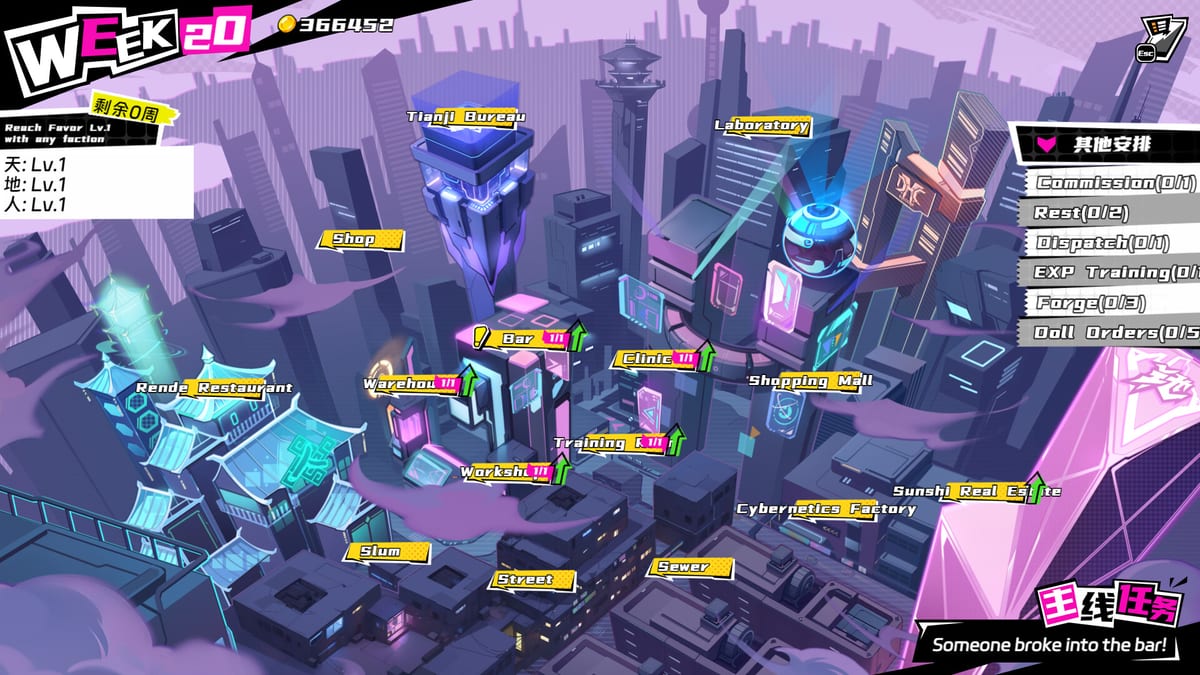
The Companion Roster page is your orientation sheet for TK Punk Gold. The game advertises thirteen companions who gradually join the GOLD resistance cell while you run the Gold Bar, accept commissions, research prosthetics, and chase bonds under a fifty-week clock. This article does not invent a fake English name plate for every partner with made-up growth curves. Instead it explains how to read the roster as a management problem: who you need for commission reliability, who rewards prosthetic investment, who is a midgame luxuries pick, and how roster growth collides with Heaven, Earth, and Man faction lanes.
What “roster” means in a raising sim
In a pure tactics RPG, a roster page is a unit database. In TK Punk Gold, roster quality is inseparable from schedule quality. A companion who looks excellent in isolation can still be a bad early pick if recruiting or bonding them burns the mobility you needed for bar income or a story commission. Treat every new face as both a combat asset and a recurring AP tax. That framing keeps the roster useful even when Steam patch notes or localizations rename menu labels.
Start from the systems that create roster pressure:
- Gold Bar work funds research and keeps the front business believable.
- Commissions stress-test party readiness and advance plot heat.
- Prosthetic and equipment research changes combat identity more than raw affection scenes.
- Partner development unlocks scenes, combat comfort, and companion endings.
- Faction goodwill still decides the four major ending directions.
If those five lanes feel crowded, open the Time Management Guide before you draft a favorite-character wishlist.
Role buckets that stay useful without spoiling every arc
Because companions arrive over time, think in buckets rather than a permanent starting six.
Frontline stabilizers are partners who make early commissions less swingy. Prioritize them when your bar is still fragile and you cannot afford failed jobs. Support and control partners shine once you understand Cyber Frenzy pacing and status windows; they often become stronger after you have researched a few prosthetics. Story-adjacent partners may feel mandatory for thematic reasons—GOLD’s resistance tone, city politics, or faction mirrors—but thematic importance is not the same as week-ten combat necessity. Late bloomers reward patience: keep a recruitment note, do not bankrupt the schedule chasing them before your economy exists.
Use How to Recruit whenever a bucket is empty because the character simply has not joined yet. Use Bonds when the character is present but scenes are stalled. Use the Companion Tier List only after you can name your current economic and faction goals; otherwise tier language becomes cosplay.
Early, mid, and late roster priorities
Weeks 1–15 should bias toward reliability. Keep at least one comfortable commission team online, fund enough bar operations to avoid desperate weeks, and unlock only the bond scenes that do not erase research windows. Cross-check Bar Management if cash is the real bottleneck. Weeks 16–35 are where roster identity forms: prosthetic kits start mattering, synergy pairs become obvious, and you should stop shotgun recruiting every available social option. This is also when Heaven, Earth, and Man goodwill starts to demand intentional event choices—see Faction Routes. Weeks 36–50 are cleanup and commitment. Finish focused bond routes, shore up ending conditions, and stop restarting your party fantasy. Validate endings with the Endings Guide and Ending Checklist.
Combat reading of the roster
Roster strength is not “highest portrait rarity.” It is how partners interact under turn-based pressure, near-death spikes, and Cyber Frenzy moments. The Steam description emphasizes physics-feeling hits, equipment and skill synergy, and near-death presentation. Practically, that means:
- Pair partners whose skills cover different failure modes (burst, sustain, disruption).
- Research prosthetics that reinforce a role instead of randomly upgrading everyone one notch.
- Revisit the Combat Guide, Prosthetics Builds, and Synergy Guide after each major research breakthrough.
A common failure pattern is collecting companions like stickers while running outdated kits. Another is over-investing in one beloved partner until commissions become two-person carries. Keep a second usable team shape even if your heart has a favorite.
Story context without false spoilers
Published materials place companions inside a cyberpunk reimagining of Three Kingdoms politics. GOLD—led by Zhang Jiao—resists the Eastern Han corporate order while Heaven, Earth, and Man factions pursue uneasy, transactional alliances against that order. Companion scenes often sit at the intersection of personal loyalty and city ideology. That is why roster planning should never ignore faction goodwill. A companion ending can feel complete while the major ending branch still fails because Man or Heaven progress was neglected.
For day-one orientation, return to the Companions Hub, Getting Started, and How to Play TK Punk Gold. For weekly execution, keep the Week Planner and Bond Tracker beside this page.
Practical roster checklist
- Name your current goal: economy, commission clear rate, one companion ending, or a major ending lane.
- Cap active bond targets so midgame AP remains flexible.
- After each recruitment, ask what prosthetic or skill gap the new partner actually fills.
- Rebalance the party after research milestones, not after every CG.
- If a partner is missing, diagnose recruitment gates before dumping affection AP elsewhere.
This roster article is meant to stay accurate as community knowledge deepens. When official patch notes or reliable localization confirm specific unlock conditions, fold those into recruitment and bond pages first; keep this page focused on decision order and role language.
Frequently Asked Questions
Quick answers for Hanport City survivors.
Does the roster include exactly thirteen companions?
Yes. Steam materials describe thirteen companions who can join the party over the campaign.
Should I build around one favorite companion immediately?
Not in the first weeks. Secure commission reliability and bar income first, then specialize kits and bonds.
How do prosthetics change roster value?
Research often matters more than raw affection. A mid partner with a focused kit can outpace an under-geared favorite.
Where do I track who I am bonding?
Use the Bond Tracker and Week Planner, then confirm ending goals in Endings Guide.
Why avoid inventing full hidden stats here?
Public materials emphasize systems and cast size, not a patch-proof English spreadsheet of exact multipliers.